Travis McCoy–Loralie McCoy relationship
The Journey CollectionThe Travis McCoy–Loralie McCoy relationship is a deep mother-son bond that shapes Travis McCoy’s identity long after Loralie McCoy’s death. She introduces him to the emotional force of football, remains the absent presence against which he measures his choices, and becomes the imagined witness to his return home, reconciliation, fatherhood, and creation of a family. Travis’s grief initially hardens into anger toward Russ McCoy, but his memories of Loralie eventually help him replace a simple accusation with a more complicated understanding of love, illness, loss, and responsibility.
Childhood Bond and Football
Loralie McCoy’s influence is tied to the earliest formation of Travis McCoy’s dream. When Travis was just after five years old, Russ McCoy loaded him into the front seat of a battered Chevrolet truck and took him to Austin, Texas, where they watched the Clarendon High School Broncos win the state championship at the University of Texas stadium. Travis did not yet understand football’s rules or fundamentals, but the collision of helmets, the roar of the crowd, and the winning touchdown made the field an object of lifelong desire. Loralie’s importance enters this memory not as a spectator but as the mother whose belief gives the dream its deepest emotional meaning. Football becomes more than a career: it becomes part of the identity she helped him imagine.
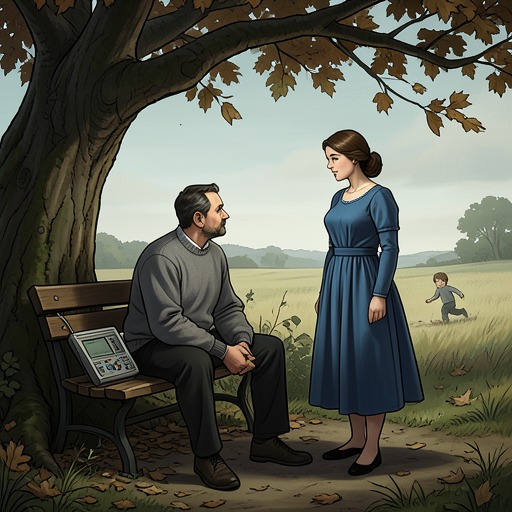
That inheritance remains active when Travis’s professional future is threatened by a severe shoulder injury. After six seasons in professional football, he is waiting in a trainer’s office to learn whether he will ever play again, remembering the hard tackle that produced a loud pop in his right shoulder and pain through his arm and chest. The injury threatens the vocation that began in childhood, but it also threatens the self Travis built around proving that the dream was possible. Loralie’s faith therefore shadows both the beginning of his athletic life and its possible ending.
Illness, Death, and Resentment
Loralie was diagnosed with Acute Lymphoblastic Leukemia when Travis was nine. He watched her struggle to get out of bed, listened as she begged God to spare her, and saw her body weaken after two years and numerous rounds of chemotherapy. She died when Travis was eleven, after falling asleep one night and failing to wake the next morning. The sudden finality of that loss leaves him with a child’s incomplete understanding of illness and an adult’s enduring sense of abandonment. He had tried to do what he could for her, but he was too young to understand fully that his mother was dying.
Travis directs much of the resulting pain toward Russ McCoy. In his memory, Russ spent his days shut away in his workshop building the ranch’s shelving unit instead of caring for his dying wife. The finished entertainment center becomes an object charged with accusation: its construction represents years that Travis believes should have been spent beside Loralie. He sees his father as a cold-hearted man who placed his own work before the family, and he cannot forgive what he interprets as abandonment. His anger toward Russ is therefore inseparable from his love for Loralie; the more sacred her suffering becomes in his memory, the more unforgivable his father’s absence appears.
Memory as Moral Witness
Loralie continues to speak through Travis’s recollections even though she is no longer alive. She had teased him that he would one day fall in love with Penelope Stone, a prediction Travis dismissed when he was six but later recognized as perceptive. His memory of asking Penelope to the spring dance, seeing her in a pale pink dress, and nervously driving her to school is linked to the emotional world Loralie had understood before Travis could name it himself. Through such memories, Loralie is associated with the possibility that affection, loyalty, and home might endure beyond fear.
At the cemetery, Travis addresses his mother directly while his career appears to be ending, his relationship with Russ is bitter, and he has learned that Penelope and he may have a child together. He admits that he has made a mess of his life and does not know what to do. The scene turns private grief into confession: Loralie is not merely remembered as someone lost, but treated as the person before whom Travis can acknowledge confusion and failure. Her absence creates the need for an imagined conversation, while her remembered love gives that conversation moral authority.
Russ later revises Travis’s understanding of his mother’s final years. He explains that Loralie held on because she loved Travis and believed he would succeed. This revelation does not erase the pain of her death, but it changes the meaning of her endurance. Travis recognizes that she would have condemned the way he left Clarendon, hurt Penelope, and treated his father, and he calls himself a fool. Loralie’s remembered judgment thus becomes a form of guidance: loving her requires not only mourning her but also accepting the standards she would have applied to his conduct.
Homecoming and Family Continuity
When Travis returns to Clarendon, he lowers the emotional walls he built after Loralie’s death and begins to know the real Russ McCoy. He had seen Russ as a man who put himself before his family; he now understands him as a broken person struggling with the loss of the woman he loved. This new interpretation does not deny Russ’s failures, but it allows Travis to hold grief and responsibility together. Loralie becomes the point through which father and son can move from blame toward reconciliation.
The homecoming football rally and the Broncos’ entrance onto the field provide a public counterpart to that private repair. Travis leads the team through the inflatable tunnel as the band plays and the crowd cheers, yet the moment matters to him less as a return to celebrity than as an experience of being home. He tells the players that the crowd’s support has been earned through hard work and that their worth does not depend solely on whether they win. The values attached to Loralie’s belief in him are redirected into mentorship: Travis now gives younger players the encouragement that once sustained his own dream.
Loralie’s influence also survives in Travis’s new family decisions. He accepts that becoming Penelope’s husband means becoming a dependable father to Max. When Travis asks to change Max’s legal surname to McCoy, he connects the request to becoming the man his mother always believed he could be and to honoring her birthday on June 1. The legal name change transforms biological connection into public family identity, while the emotional purpose behind it shows that Travis understands fatherhood as an obligation rather than a title.
Legacy in Ritual and Renewal
Max’s eventual address to Travis as “Dad” marks the fulfillment of a bond Travis has feared he might not deserve. After the Broncos win the state title through a successful two-point conversion, Max climbs onto the bench, embraces Travis, and thanks him for bringing him home. Travis answers by thanking Max for bringing him home instead. The exchange reverses the expected direction of rescue: Loralie once gave Travis a dream and a standard for manhood, while Max gives him the chance to enact that inheritance through daily fatherhood.
Travis and Penelope’s wedding completes the family structure that Loralie’s memory has helped him build. During the ceremony, Travis and Penelope exchange vows to remain together in sickness and health, and they invite Max to stand between them while all three light the eternity candle as a family. The ritual makes visible the continuity between Loralie’s faith in Travis and the family he now chooses to protect. Loralie is not physically present, but the marriage embodies the qualities Travis associates with her: endurance, love, and the conviction that a damaged life can still become whole.
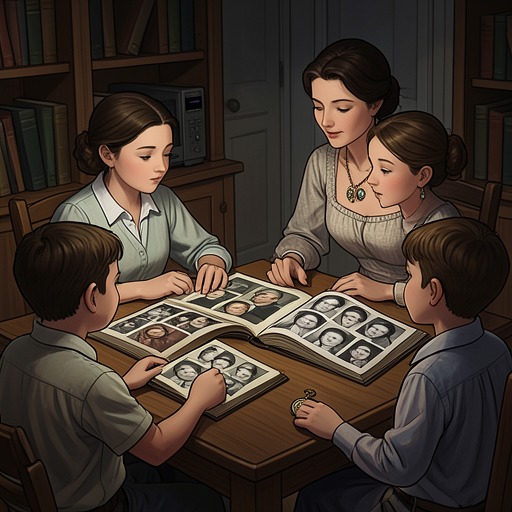
Her legacy extends into the next generation when Penelope later presents an ultrasound photograph to the family. The image announces that Travis and Penelope are expecting another child, making Loralie’s influence part of an expanding family line rather than a closed memorial past. The relationship therefore ends not with Travis escaping grief but with him carrying his mother’s love, judgment, and faith into fatherhood, marriage, community leadership, and the future.